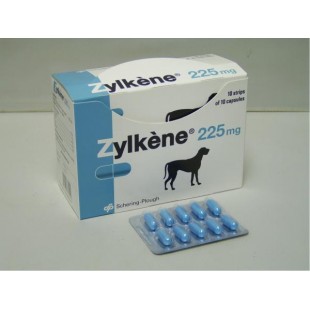
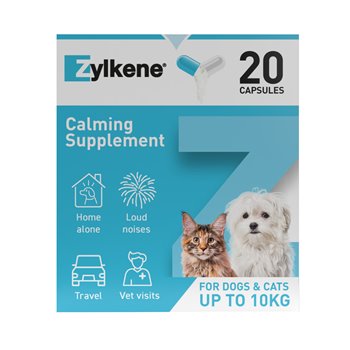
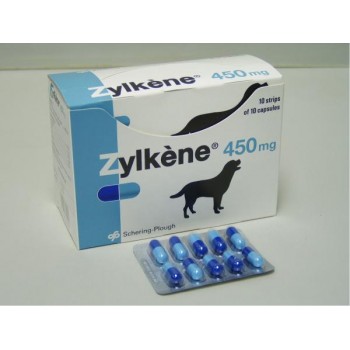
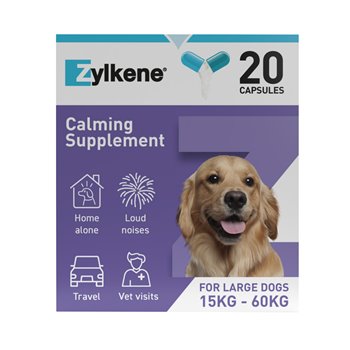
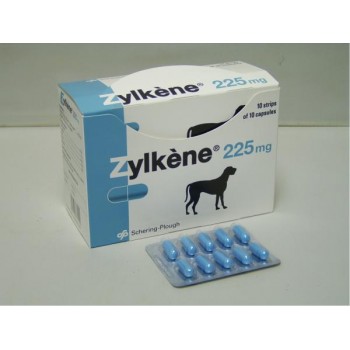
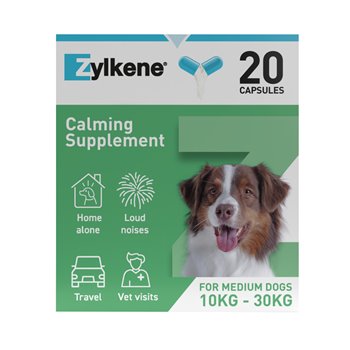
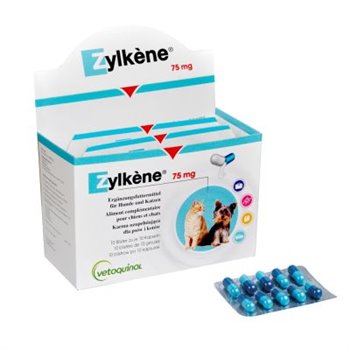
Zylkene for Dogs is a calming supplement that can help support dogs who find change, novelty, or being alone difficult. Many dogs show stress responses that look like naughty behaviour, but they are often signs of emotional discomfort rather than stubbornness.
Zylkene is commonly used for predictable challenges such as travel, visitors, fireworks, vet visits, grooming, moving house, adoption, or kennel stays, and it can also be used when a dog seems generally unsettled. It is supplied as capsules containing a naturally derived milk-protein peptide, and the capsule can be given whole or opened and mixed with food. Zylkene is classed as a complementary feed (nutraceutical) rather than a sedative medicine, so it is often chosen as a gentle first step for mild to moderate stress, or as additional support alongside behaviour work.
Anxiety in dogs is more than occasional nerves. Clinically, it describes a state of heightened fear or anticipation that persists beyon...
Zylkene for Dogs is a calming supplement that can help support dogs who find change, novelty, or being alone difficult. Many dogs show stress responses that look like naughty behaviour, but they are often signs of emotional discomfort rather than stubbornness.
Zylkene is commonly used for predictable challenges such as travel, visitors, fireworks, vet visits, grooming, moving house, adoption, or kennel stays, and it can also be used when a dog seems generally unsettled. It is supplied as capsules containing a naturally derived milk-protein peptide, and the capsule can be given whole or opened and mixed with food. Zylkene is classed as a complementary feed (nutraceutical) rather than a sedative medicine, so it is often chosen as a gentle first step for mild to moderate stress, or as additional support alongside behaviour work.
Anxiety in dogs is more than occasional nerves. Clinically, it describes a state of heightened fear or anticipation that persists beyond the immediate trigger, and it can involve activation of the sympathetic nervous system and the hypothalamic-pituitary-adrenal (HPA) axis. When that internal alarm system stays switched on, a dog may react strongly to everyday situations, struggle to recover after a scare, or develop learned fear around certain places, sounds, or people.
Common patterns include noise phobia, separation-related distress, travel anxiety, and generalised anxiety, where the dog seems on edge much of the time. Signs can be subtle at first, and they may come and go, so it helps to look at the whole picture, including body language and changes in appetite or digestion:
- panting, trembling, pacing, or restlessness without an obvious physical cause
- hiding, freezing, clinging to people, or constantly seeking reassurance
- vocalising, destructive behaviour, house soiling, or repeated attempts to escape
- lip-licking, yawning, pinned ears, dilated pupils, or a tucked tail
- reduced appetite, loose stools, or increased startle responses during stressful periods
Because anxiety can be worsened by pain, hormonal changes, cognitive dysfunction, or gastrointestinal discomfort, a veterinary check is important when signs are frequent, escalating, sudden in onset, or associated with aggression.
Zylkene works through alpha-casozepine, a bioactive peptide produced from hydrolysed bovine milk protein (casein). Alpha-casozepine has an affinity for specific binding sites associated with the GABA-A receptor complex in the brain. GABA (gamma-aminobutyric acid) is the main inhibitory neurotransmitter in the central nervous system, and it helps regulate arousal by reducing excessive neuronal firing and supporting emotional regulation.
By supporting GABA-mediated pathways, Zylkene may help reduce the intensity of stress reactivity and help a dog return to baseline more easily after a trigger. In practical terms, this can look like less pacing, better ability to settle, and improved resilience when routines change. Zylkene is intended to support calm behaviour without making most dogs drowsy, and it is not associated with dependence. Even so, every dog is an individual, and calm support works best when the environment and learning needs are addressed at the same time.
The way anxiety looks can vary from dog to dog, so it helps to match Zylkene use to the pattern you see at home. For short, predictable stressors, the aim is to support your dog before they tip into a full fear response, because learning and reassurance are harder once a dog is over threshold. For longer-standing anxiety, the aim is often to reduce baseline arousal so your dog has more emotional bandwidth for training and daily life. Zylkene can be used alongside practical steps such as maintaining predictable routines, providing a quiet safe zone (with bedding, water, and familiar scents), and managing triggers where possible.
If noise is a problem, sound masking and gradual desensitisation can help, while separation anxiety usually needs a structured programme that teaches your dog that alone-time is safe. Punishment tends to worsen anxiety, so focus on calm reinforcement, choice, and gentle handling. Where needed, your vet may recommend referral to a qualified clinical animal behaviourist, and Zylkene can be used as part of that wider plan.
For best results, Zylkene is usually given consistently, with timing tailored to your dog's needs. For short-term challenges, many owners start Zylkene one to two days before a predicted event or before a planned change in routine, then continue through the stressful period. If you know the trigger will be intense, starting a little earlier and keeping the wider routine calm at the same time can help. For longer-term support, Zylkene is often given daily for around a month before you reassess your dog's response, as calmer patterns can take time to show up in day-to-day behaviour. It is sensible to keep notes, especially with separation-related distress or noise phobia, because small gains (settling faster, eating more normally, sleeping better) matter. If anxiety remains significant or is affecting quality of life, speak with your vet, as some dogs benefit from a combined approach that may include behaviour medication as well as Zylkene and training.
How does Zylkene work?Zylkene contains alpha-casozepine, a peptide derived from hydrolysed milk protein. It has affinity for binding sites associated with the GABA-A receptor complex, which is involved in regulating arousal. By supporting inhibitory signalling in the brain, Zylkene may help reduce stress reactivity and improve a dog’s ability to settle.
How long does Zylkene take to work?
Some dogs show changes within the first day, but responses vary. For predictable events, many owners start Zylkene one to two days beforehand so it is on board when the trigger occurs. For ongoing anxiety, daily use for several weeks may be more useful before you judge the effect.
Can Zylkene help dogs with fireworks or noise phobias?Zylkene can be a helpful part of a noise-anxiety plan, especially when started before fireworks season or a known event. Combine it with a safe den area, sound masking, and gradual desensitisation training. If your dog panics, injures themselves, or cannot eat or rest, ask your vet about additional options.
How do I give Zylkene to my dog?Zylkene capsules can be given whole like a treat, or you can open the capsule and sprinkle the powder onto wet or dry food. Giving it at a similar time each day helps consistency. If your dog is fussy, mixing the powder into a small, tasty portion first can improve acceptance.
When should I see a vet about my dog’s anxiety?Book a veterinary appointment if anxiety is sudden, frequent, escalating, or linked with aggression, self-injury, or significant weight loss. Your vet can check for pain and medical triggers, and can recommend behaviour support or medication when appropriate. Early help often prevents fear patterns becoming entrenched.